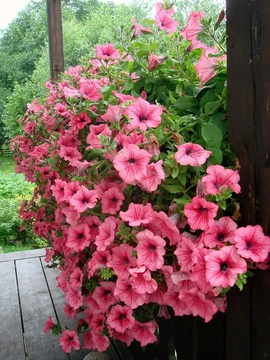
Dahlia
Genus of tuberous perennials native to Mexico and Central America.

Dahlia is a genus of bushy, tuberous, herbaceous perennial plants native to Mexico and Central America. Members of the Asteraceae (Compositae) family, dahlias are relatives of sunflowers, daisies, chrysanthemums, and zinnias. There are 49 species, with flowers in almost every hue except blue; hybrids are commonly grown as garden plants. Dahlias were known only to the Aztecs and other southern North American peoples until the Spanish conquest, after which the plants were brought to Europe.
- native_region
- Mexico and Central America
- family
- Asteraceae (Compositae)
- number_of_species
- 49
- flower_color_range
- Almost every hue except blue
- first_european_description
- 1570 by Francisco Hernández
- genus_named_after
- Anders Dahl
- ploidy
- Octoploids (eight sets of homologous chromosomes)
Lore & Background
Indigenous peoples used them as food, gathering wild specimens and cultivating crops, identifying them as 'Chichipatl' (Toltecs) and 'Acocotle' or 'Cocoxochitl' (Aztecs). The name derives from Nahuatl words meaning 'water cane' or 'hollow stem flower,' referring to the hollow stems. Hernández described two varieties: the pinwheel-like Dahlia pinnata and the huge Dahlia imperialis, along with other medicinal plants. Drawings by Francisco Domínguez showed plants with flowers resembling modern bedding dahlias and Dahlia merckii, all displaying a high degree of doubleness.
Reader's Guide
Dahlias were introduced to Europe in the late 18th century. Cavanilles later named three species: D. pinnata, D. rosea, and D. coccinea. Seeds and tubers were sent to gardens across Europe, including Kew Gardens, Paris, Berlin, and Italy. Over time, at least 85 species were reported, but morphological variation and hybridization have led to constant reclassification; today, botanist Liberty Hyde Bailey classifies dahlias into 15 species. The great diversity results from octoploidy and the presence of many transposons. Dahlias are not frost-hardy, have tuberous roots, and produce composite flower heads called capitula. Their tubers contain inulin instead of starch, giving them medicinal and dietary value.
Did You Know?
- Dahlias are octoploids, having eight sets of homologous chromosomes, which contributes to their great diversity.
- The tubers of some varieties contain inulin, a polymer of fructose, instead of starch.
- Dahlias were known only to the Aztecs and other southern North American peoples until the Spanish conquest.
- The modern name Asteraceae comes from the type genus Aster and the Ancient Greek word for 'star.'
Botanical Architecture & Genetic Complexity
Dahlias are bushy, tuberous perennials whose stems can range from a modest thirty centimetres to nearly two and a half metres in height. Their most striking feature is the composite flower head, or capitulum, a structure in which numerous individual florets cluster around a central disc, bordered by petal-like ray florets. Each of these florets is, in its own right, a complete flower. The resulting blooms span a remarkable size spectrum, from a mere five centimetres across to the so-called dinner-plate varieties reaching thirty centimetres. Colour-wise, dahlias display virtually every hue in the spectrum with one notable exception: blue. The extraordinary variety seen in modern garden dahlias has a genetic explanation. These plants are octoploids, carrying eight complete sets of homologous chromosomes. On top of this, their genomes harbour numerous transposons—mobile genetic elements that shift position along an allele. Together, these factors fuel the staggering morphological diversity that makes dahlias a favourite among horticulturists. Despite their vigour, they are not frost-hardy and require winter protection in colder climates.
Indigenous Heritage & Early Documentation
Long before European eyes ever encountered them, dahlias thrived in the gardens and wildlands of Mexico and Central America, known exclusively to the Aztecs and other indigenous peoples of southern North America. The Toltecs called the plant Chichipatl, while the Aztecs used the names Acocotle or Cocoxochitl. Through a chain of Nahuatl-to-Spanish translations, these terms carried meanings like water cane, hollow stem flower, or water pipe, all pointing to the plant's distinctive hollow stems. Indigenous communities both gathered wild specimens and cultivated them as a food source. A more rigorous study followed in 1570, when Francisco Hernández, physician to King Philip II, was dispatched to catalogue the natural products of New Spain. He described two varieties—the pinwheel-like D. pinnata and the towering D. imperialis—alongside other medicinal plants. His companion, Francisco Domínguez, produced detailed botanical drawings, three of which depicted dahlia flowers of varying doubleness. Tragically, the original manuscripts perished in a mid-seventeenth-century fire.
The European Awakening
The dahlia's arrival in European botany was a slow, multi-decade affair. Two years later, Vicente Cervantes, director of the Mexico City Botanical Garden, shipped plant parts to Abbe Antonio José Cavanilles at the Royal Gardens in Madrid. Cavanilles coaxed the first specimen into bloom that same year and a second the following year. pinnata and D. rosea. A third, D. From Madrid, the new genus radiated outward. John Fraser carried D. coccinea seeds to the Apothecaries Gardens, where they bloomed in a greenhouse. sambucifolia at Holland House in Kensington.
Practical Utility & Botanical Kinship
Beyond their ornamental appeal, dahlias carry a practical significance rooted in their biochemistry. The tubers of certain varieties hold both medicinal and dietary value for humans. This utility stems from a distinctive metabolic trait: rather than storing energy as starch, dahlias accumulate inulin, a polymer of the fruit sugar fructose. This same characteristic is shared by species of Inula and many other flowering plants, placing dahlias within a broader group of inulin-accumulating species. Taxonomically, dahlias sit within the Asteraceae family (historically called Compositae), a vast group of dicotyledonous plants. Their close relatives include the sunflower, daisy, chrysanthemum, and zinnia—plants that share the same composite flower architecture of disc florets surrounded by ray florets. The family name Asteraceae itself derives from the type genus Aster and the Ancient Greek word for star, evoking the radiating, star-like appearance of these flower heads. The genus encompasses 49 recognised species, and the hybrids commonly cultivated in gardens represent only a fraction of the natural diversity. Most species produce unscented flowers, relying instead on their vivid, multi-hued colouration to attract pollinating insects. This bright display, spanning nearly the entire visible spectrum except blue, is a direct evolutionary trade-off for the absence of fragrance.
Frequently Asked Questions
What is Dahlia?
Dahlia is a genus of bushy, tuberous, herbaceous perennial flowering plants that originated in Mexico and Central America. They belong to the Asteraceae family and are widely cultivated as ornamental garden plants.
Where are dahlias native to?
Dahlias are indigenous to Mexico and Central America, where the Aztecs and other indigenous peoples grew them long before any European saw them. The Spanish brought the plants to Europe following their conquest of the region.
What plant family does Dahlia belong to?
Dahlias sit within the Asteraceae (Compositae) family, making them botanical cousins of sunflowers, daisies, chrysanthemums, and zinnias.
How many dahlia species are there?
There are 49 recognized species in the genus, though the overwhelming majority of dahlias you see in gardens today are hybrid cultivars bred for their showy, multi-layered blooms.
What colors do dahlia flowers come in?
Dahlias bloom in nearly every hue in the spectrum, with the single notable exception of blue. That extraordinary color range is a major reason they remain a favorite among gardeners and florists.
More in Ornamental & Garden Plants 1-24
Elsewhere in the Ornamental & Garden Plants universe
Spotted an error? Know more?
This is a living reference — every entry is fact-audited, and reader corrections feed straight into our audit queue. Suggest an edit · See this site's audit record